
By:Romelith Jasmin Peregua
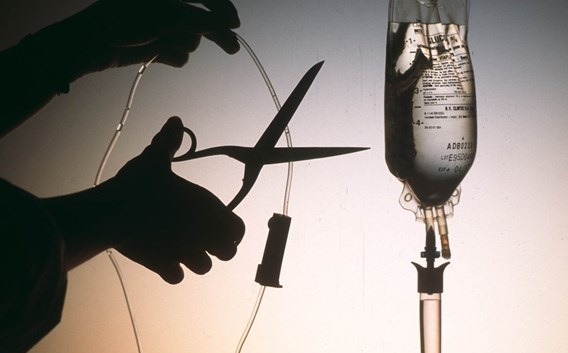
Death is inevitable fate of all living organisms in this world as well as humans. It will always come to an end that humans will eventually die, it could be natural death, caused by illness, suicide or murder. In this day new illnesses are brought into existence, some can be cured and some are not. People who’ve diagnosed with terminal illness a type of incurable diseases tend to suffer and others are living under life support machines. To end the suffering of the patient, euthanasia is being practiced.
Euthanasia can be classified as voluntary and non-voluntary. Voluntary euthanasia, whereas a person makes a conscious decision to die and ask for help to do so. Non-voluntary euthanasia, on the other hand is a person who is unable to give their consent to treatment and another person takes the decision on their behalf, often because the ill person previously expressed a wish for their life to be ended in such circumstances (“NHS”, 2017).
In some cases there has been abuse where euthanasia and assisted suicide are legal. It is impossible to establish guidelines strict enough to limit euthanasia to persons for whom it is provided. In fact, the safeguards provided do not hold up in practice. According to Professor Etienne Montero, Dean of the Faculty of Law of the University of Namur in Belgium, it is extremely difficult to follow a strict interpretation of legal requirements once euthanasia is permitted.
There are several documented cases of abuse in countries where euthanasia is legal and in countries or U.S. states where assisted suicide is legal. For example, in Belgium deaf twins were euthanized at their request because they became blind. Also in Belgium, a woman was euthanized because she was suffering from anorexia. In the Netherlands, a woman was euthanized because she was going blind and could not see the dirt. In Oregon, United States, a woman received a letter from her insurance company refusing to pay for her chemotherapy, but offering assisted suicide instead (“Vivre Dans La Dignité”, n.d.)
Many deaths were peaceful and were reported as being positive occasions for all concerned, but not all deaths ends sweetly. A therapist and former priest, named Stanley, took four or five hours to finish his patient. He tried insulin and everything else that he had around. Later he put a pillow over his patient’s head, and seems to work in the end. For him, that was one of the worst and most horrible things he have ever done (“R S Magnusson University of Sydney”, n.d.).
Dr. Sherwin Nuland, Yale University School of Medicine, commenting on a report about Euthanasia Deaths are not easy, said: “This is information that will come as a shock to the many members of the public – including legislators and even some physicians – who have never considered that the procedures involved in physician-assisted suicide and euthanasia might sometimes add to the suffering they are meant to alleviate.”(“BBC NEWS”, 2000). The attempts of the doctors to lessen sometimes tends to add the suffering of the patient.
Euthanasia, also called mercy killing is a practice of painlessly putting an end to ones person’s suffering and life from incurable disease or withdrawing artificial life-support measures. Because there is no specific provision for it in most legal systems, it is usually regarded as either suicide or murder (“Encyclopaedia Britannica”, 1998). Euthanasia may be a solution to someone’s pain and suffering but its not moral to end someone’s life even if it can ease suffering. It is no different from murdering and killing by all means. Imagine how people around the world planning the time and manner of your death, it loses patient’s hope to live. They would feel worthless and burden to their family. This create pressure to them that would push them to give up life and die.
It may be hard for someone to watch their loved ones suffering from incurable diseases, but as a human we have no rights to take someone’s life, and as a Christian, I’m against to it. We should encourage those who suffer and is about to give up. Give them reason to live, hope and make them feel needed and important.
BCC NEWS.(2000, February 24). Euthanasia deaths ‘not easy’. BCC NEWS. Retrieved from
http://news.bbc.co.uk/2/hi/health/655143.stm
Encyclopaedia Britannica.(1998). Euthanasia. Retrieved from https://www.britannica.com/topic/euthanasia
NHS. (2017, June 29). Euthanasia and Assisted Suicide. Retrieved from
https://www.nhs.uk/conditions/euthanasia-and-assisted-suicide/
R S Magnusson University of Sydney.(n.d). Euthanasia: above ground, below ground. Law, Ethics and Medicine, 30(5), 441-446. Retrieved from https://jme.bmj.com/content/medethics/30/5/441.full.pdfhttps://jme.bmj.com/content/medethics/30/5/441.full.pdf
Vivre Dans La Dignité. (n.d). Arguments against euthanasia. Retrieved from https://vivredignite.org/en/against-euthanasia/
R S Magnusson University of Sydney.(n.d). Euthanasia: above ground, below ground. Law, Ethics and Medicine, 30(5), 441-446. Retrieved from https://jme.bmj.com/content/medethics/30/5/441.full.pdfhttps://jme.bmj.com/content/medethics/30/5/441.full.pdf
Vivre Dans La Dignité. (n.d). Arguments against euthanasia. Retrieved from https://vivredignite.org/en/against-euthanasia/
Encyclopaedia Britannica.(1998). Euthanasia. Retrieved from https://www.britannica.com/topic/euthanasia
 Wonder Pets