
By: Cindydine Love Praico
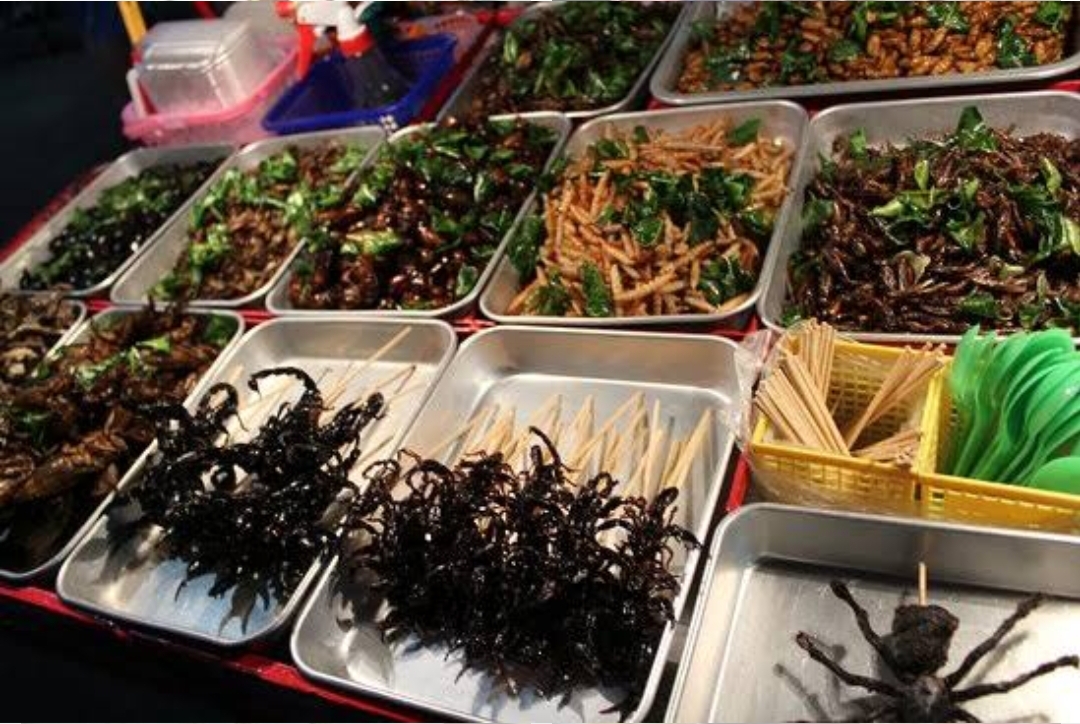
When everyone heard the word exotic food, everyone would think nasty and weird ingredients mixed up to make an edible food for those who live in places far from the civilization. People would think because of its peculiar looks and scents; it would taste bad as well.
Let’s go back to the year 1935 to 1945, the duration of World War II. It was the reason why exotic food exist in each of country’s cuisine. During the war, spiders, worms, and any other insects and leaves, for survival. Now, we have discovered different spices and seasoning that made it more mouthwatering than before. Though, it still does looks ugly and nasty.
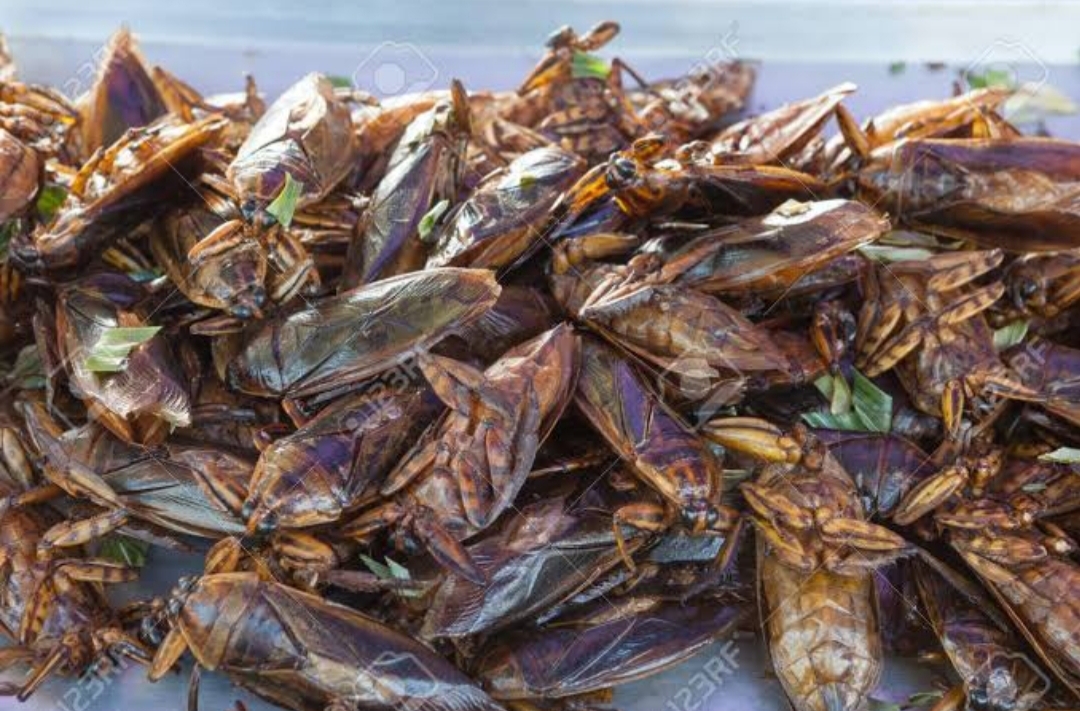
The country that is known for its exotic food is China. Chinese people love to create and experiment with their food as long as the outcome would be the same, it would be edible. Here are the examples of Chinese Exotic food: Deep fried scorpion, star fish, sea horse, snakes and even fetus, Stewed dog meat, snails and bird’s nest, and seasoned cockroaches, centipedes and bugs. You might think that this is all nasty and seems impossible to be eaten but they can and Chinese folks do enjoy them. Some foreigners who tried these local delicacies of Chinese gives off both negative and positive comments. But most of the people who tried them, usually hated them, and this is inevitable. There are different preferences when it comes to food anyway.
According to Coughlan (2016) there are several question lurking why people have preferred different food even though their siblings and such. So, they formulated questions that would hit the eye of the problem.
Here are the questions and answers of different experts regarding the problem.
Why do people like one type of food and really dislike another? How much are our responses to food, including putting on weight, influenced by genetics?
And could the taste of food be chemically re-engineered to appeal to particular groups, such as the elderly?
A unique summit of some of the world’s leading chefs and top scientists put our complicated relationship with food under the microscope.
This “Brainy Tongue” experiment, a collision of science and cooking, took place in San Sebastian in the Basque region of northern Spain, a seaside resort famous among food lovers for its Michelin-starred restaurants.
It was staged at the Basque Culinary Center, a university entirely dedicated to researching food.
‘Unpeeling the layers’
Hesston Blumenthal might have been a pioneer of scientific precision in the kitchen, but his latest passion is investigating how food can be so strongly linked to memory.
Whether it’s the scents of a seaside holiday, ice cream bought as a childhood treat, or a box of cereal, he says a meal can be a way of “unpeeling the layers” of emotions.
He says: “We bury things, and then when you start talking, ‘Do you remember that cereal? Oh yeah, variety packs. I loved it when I got the toy or there was the bag that wouldn’t open properly.’
“You have this discussion at the table, you start revealing, you start opening up your own memories, you start opening up with positive nostalgia, the floodgates open.”
Mr. Blumenthal says he wants to experiment with how a restaurant can use “storytelling” to coax out those memories.
Science of taste
He says chefs need to recognize the brain is the “gatekeeper” for enjoying food and before a mouthful goes near the lips, the brain has made millions of computations.
And his “restless perfectionism” continues to test the “difference between perception and reality”.
The same glass of wine can taste different depending on the background music, he says.
And restaurants can manipulate such responses.
Playing loud music makes people eat more quickly, while classical music means people will spend more money on wine, he says.
But why are we so different in what we like to eat?
The event in San Sebastian (or Donostia as it’s called in Basque) examined the science of taste.
Dr. Charles Zuker, a neuroscientist from Columbia University in New York, says all animals are “pre-wired” to prefer sweet tastes to bitter.
“There are no lions out in the wild drinking tonic water,” he says.
But Dr. Zuker says there are also “acquired tastes”, where the social reward outweighs an initial dislike – such as drinking beer and coffee.
‘Turn up volume’ on tastes
And what makes this mix even more individual is that we all have our own genetic, inherited preferences.
“We have differences because of variations in our genes,” he says.
“And that is likely to greatly impact how much sugar I want to have in my coffee.
“It might be that I need six spoons of sugar to get the same level of satisfaction and reward that you get with only two.
The next frontier, says Dr. Zuker, will be to redesign food to respond to such differences.
For example, it could mean food being specially adapted for older people.
The sense of taste declines with age, and Dr. Zuker says there could be a way to “turn up the volume” on flavors.
He says: “How do we tweak the taste receptors in an ageing tongue, in a way that we maximize the signals? This is like a hearing aid for your tongue, like glasses for your eyes.
“We’re going to call it either personalized food and health or you can call it precision food, because it’s been custom-tailored to your genetic make-up as well as your history of preferences.”
Overloading the brain
But what if the problem is liking the taste of food too much?
Dr. Dana Small, a psychiatrist and expert on flavor at Yale University, says the human brain, which has evolved over millions of years, struggles to cope with the modern combination of food that is both high fat and high sugar.
“In nature, there is no food that is high in both fat and sugar. There is no doughnut in nature,” says Dr. Small.
“The brain has never seen these two signals arriving at the same time. So what does it do to your brain? Our food has changed in a way that may challenge our physiology.”
There is one visible outcome of changing diets – more of us getting overweight.
Blame the genes
But Professor Sir Stephen O’Rahilly, a Cambridge University geneticist, says it is becoming increasingly apparent that weight is often about our genes rather than our greed.
“A lot of people think that obesity is largely a problem of emotionally driven overeating,” he says.
“But in fact, if you look at the information about why some people are obese, we tend to underestimate the extent to which underlying biological differences between people are at the root of that. In some ways that stigmatizes the obese.
“Are people who remain lean morally superior or are they biologically different? Our work suggests strongly that they’re different and pre-disposed in a different way to those who remain lean.”
The “best” food can also depend on the circumstances.
“The best hot chocolate you’ve ever had could be a cheap manufactured one that someone gave you when you got lost and it was raining. That’s the beauty of food, it not just fuels,” says Mr. Blumenthal.
Top chef Andoni Luis Aduriz, from the Mugaritz restaurant in San Sebastian, says that as much as the food, people come to restaurants seeking the shared social experience and the sense of a “moment”.
But there are still mysteries to be unraveled.
Dr. Zuker says: “How could it be that you could smell a scent that transports you to a unique event in your life. Your first date, your mother’s cooking? How can you take one smell and re-evoke an event?
“Well… we don’t know.”
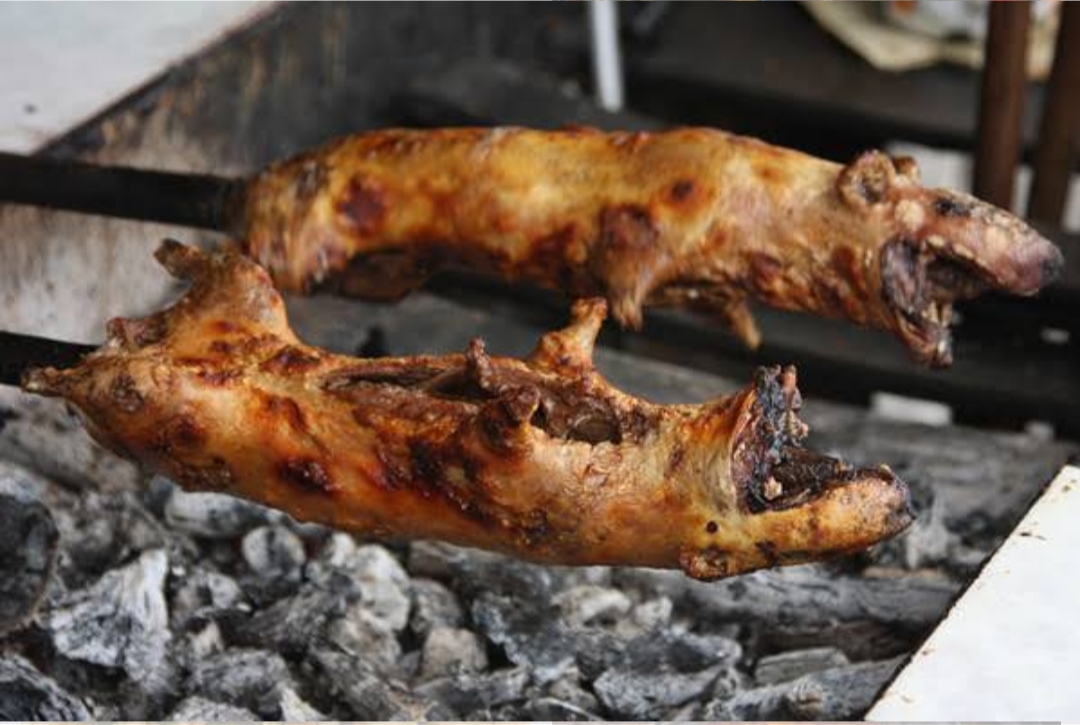
Sometimes the looks of the food affect the taste or even the smell have impact on taste but what is more important, the food should not be judge based on the peculiarity and the place it came from. But the way people made it to be.
In every culture, at least one food requires courage from those who try it for the first time. Take French cuisine, for example. You have to wonder who decided that only the common garden snail could do proper justice to a garlic and butter sauce. Yet escargot tastes delicious — once you forget that your appetizer spent many happy days spreading mucus trails and feeding off decayed plants.
And what about the Japanese penchant for seaweed? Many people view seaweed solely as a slippery nuisance that causes beaches to smell strange. But the Japanese count upon the marine algae to lend flavor to soups, salads, and even sushi.
Many cultures have a favorite eel dish. The next time you’re visiting Britain, watch for an East End street vendor hawking fresh jellied eels, a popular treat made by boiling fresh eel with seasonings and adding gelatin to the stock. Sound icky? Scandinavians might agree – they prefer their eel baked and served cold on bread. Each country has their own exotic food that taste and look peculiar to others but in our perception these exotic foods are not that bad at all.
https://www.bbc.com/news/business-37800097
http://biancavalerio.com/beijing-wangfujing-exotic-street-foods/
https://www.thespruceeats.com/unusual-chinese-food-692613
https://noemycolladofinals.weebly.com/introduction/september-26th-2015
I couldn’t find one site that I use as preference so credits to the writter








 Wonder Pets